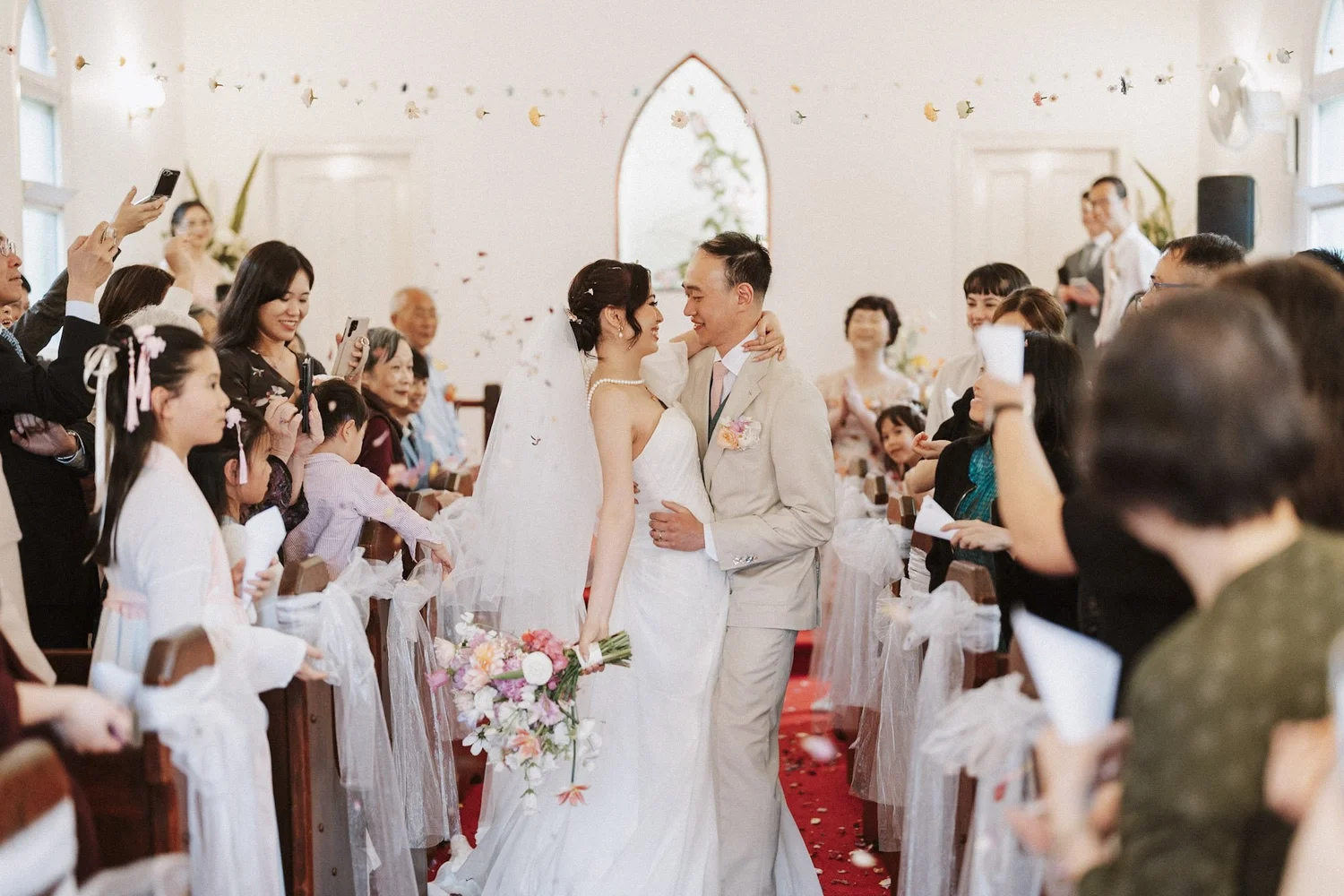
GUIDE · PLANNING YOUR DAY
A TIMELINE THAT
WORKS FOR PHOTOS.
Photographs and video look better when the day isn't rushed. Here's how I think about the schedule.
START WITH THE LIGHT
Work backwards from sunset and the ceremony.
Two things anchor the schedule: your ceremony time and the time the light is best. Everything else, from getting ready to the reception, can be arranged around them.
The shape of the day.
- Getting ready: leave enough time for the details and calm moments before the ceremony
- First look or ceremony: protect the vows and the walk, then allow a little space afterwards
- Family photos: agree a short list beforehand so they take minutes, not an hour
- Couple and wedding party portraits: a protected window, ideally near good light
- Reception: speeches, first dance and the dance floor, where candid moments happen
A COUPLE OF HONEST TIPS
Leave buffer. Tell people where to stand.
Weddings run late, and that's fine if there's a little buffer built in. A relaxed couple is a better photograph than a punctual, stressed one.
Nominate one or two people who know your families to help gather everyone for group photos. It makes the process faster and calmer.
QUESTIONS
Answered plainly.
How long should family photos take?
With a short, agreed list and someone to gather people, family groups can be handled efficiently. Making that list beforehand is the single best way to keep them quick.
How much time should we leave for couple portraits?
Leave a protected window for portraits and build it around the light. Golden hour is short, so it's worth planning the evening rather than leaving it to chance.
Will you help us build the timeline?
Yes. Planning and timeline help is part of photography coverage. Send me your ceremony time, venues and sunset time and I'll give honest feedback.
KEEP LOOKING